While many organizations are just getting comfortable with intelligent chatbots, a significant portion of the tech world is already deep in fully agentic systems. Their goal of everyone else is same: to have an AI system that not only thinks but also executes tasks.
However, my experience moving these systems into real business environment showed me two major problems:unbearable token costsandagent control nightmares.
The Reality of Token Economics
At first, tokens were cheap. But that’s because LLM providers were heavily subsidized by venture capital; the true cost of tokens was (maybe still is) being covered by investors money. But now that language models are maturing, basic economics are taking center stage in how providers behave.When you scale AI across an entire company, token usage becomes incredibly expensive—in my opinion, too expensive to justify the investment.
The Cost Paradox vs. Human Labor:
I found that anytime I want my agents to do a simple recurrent task—something valuable for the company, not just a basic sandbox test to prove agents can do it too—the cost of tokens is not that far from the actual cost of a human being doing it. And for more complex tasks, it was always more expensive.
Human salaries are actually becoming less expensive than running many of these independent agents, making the token investment incredibly hard to justify.
There is an absurd case reported byAxios wheretheir client accidentally burned through $500,000,000 USD in tokens in a single monthbecause limits werent established correctly. While that is an extreme example, it shows reality of many: the token cost issue becomes a massive issue the moment you have recurrent daily application the company relies on.
The Illusion of Control and Model Drift
Then there’s the control issue: fully agentic systems do not behave exactly the same way every time.Over weeks and months, an agents output will naturally differ a little bit. On top of that, models get deprecated. For example, we tested Gemini 2.0 Flash for a couple of months. Our process was perfect after we spent many man-days optimizing it, but then the model version changed, and we had to start all over again just to make sure the output was the same.If your entire business logic relies on a fully autonomous agent, you end up stuck in a cycle of starting over and fixing the exact same processes again and again. As a business owner, I cannot rely on something so unstable. I need to build a company brick by brick—not progress up to brick 5 only to find that brick 1 was deleted or changed without my permission.
My solution to the problem: Building an "ERPs" for Agents
I solved both issues when we shifted our focus to creating systems for agents instead of humans. I though that, you can still have the intelligence of an agentic system, but paired with the low operational costs and consistency known to traditional software in IT.
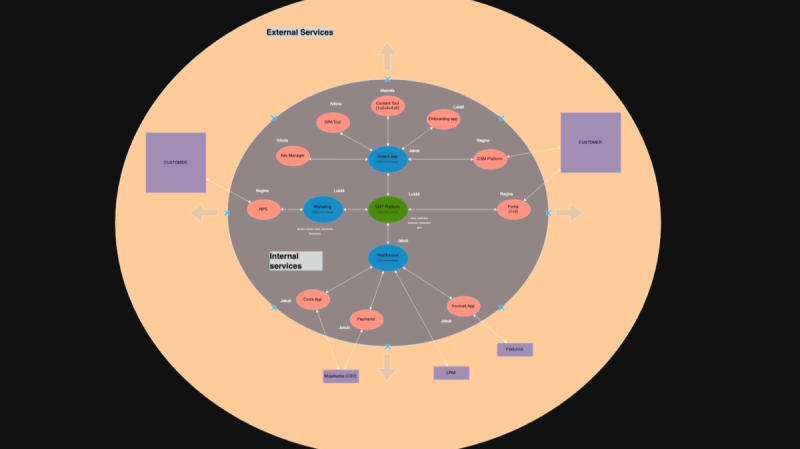
Something like build "ERP" for agent — IT system whos primary user is no longer a human, but a agent. Instead of letting an agent do the task on it's own, the agent simply sends structured requests to predefined algorithms. Once the script is ready, its daily operation is cheap - very little tokens are being consumed. It also ensures the output is consistently of higher quality, allowing us rely on the systems without loosing our sleep.
This approach, of course, isnt without its own challenges, we had to rehire new set of peoples to make this working, and Im going to talk about those in my next article—but I think we found a sustainable solution to this as well.
Moving Forward
I don’t think these fully agentic systems are going to hold up for long and I think it makes no sense to invest into something temporary. I can only guess how token costs will develop over time, but seeing the current direction of major LLM providers, my guess is that they will only become more expensive.
Basic economics will eventually take over. This crazy token-spend rush is going to end, transforming into something much more sustainable, predictable, and profitable.